
April 15, 2025
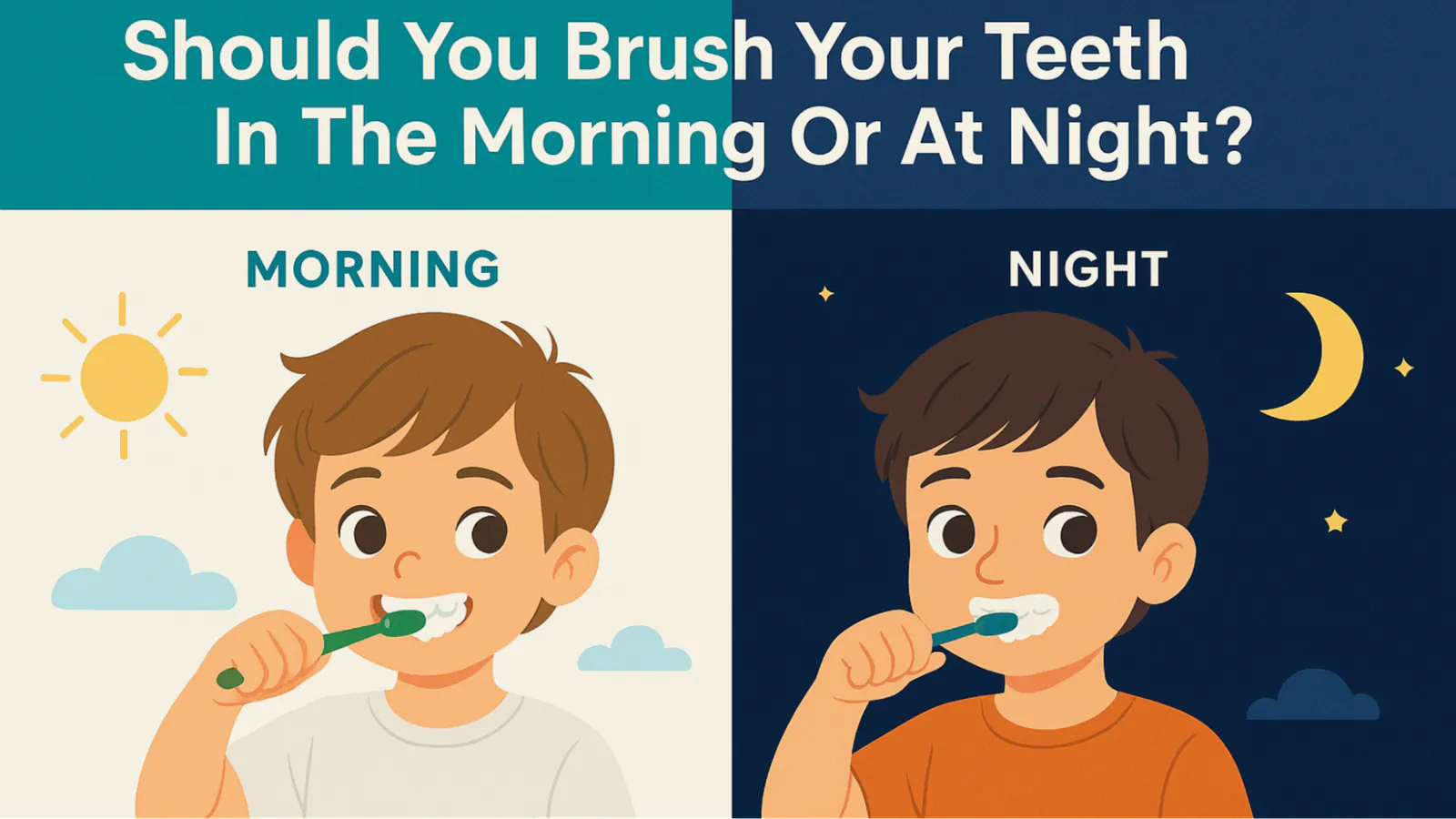
Your oral health plays a vital role in your overall well-being. We’ve all heard that you should brush your teeth twice a day. However, not everyone follows this advice.
According to a survey, only 7 out of 10 Americans brush their teeth at least twice a day. But when is the best time to brush your teeth—morning or night? Let’s discuss the same.
Bacteria need a warm, moist, and nutrient-rich environment to thrive. Our mouth provides all these conditions, especially when food particles and saliva interact. The combination of warmth, moisture, and leftover food allows bacteria to multiply rapidly. This leads to plaque buildup that further contributes to tooth decay and gum disease.
That is why brushing your teeth is key to keeping your teeth and gums healthy. It helps:
Are you wondering, “How many days can you go without brushing your teeth?” Well, failing to brush your teeth regularly can have serious consequences, including:
That is why you should not skip brushing even a single day for your oral health.
If you are wondering how many times you should brush your teeth a day, the answer is both. Here is why:
Saliva is vital for oral health. It helps wash away food debris and bacteria. However, saliva production decreases when you sleep. This helps bacteria to multiply.
That is why when you wake up in the morning, you may notice a stale or unpleasant odor in your mouth, commonly known as morning breath.
Brushing your teeth in the morning helps remove odor-causing bacteria and gives you a fresh start to the day.
Bacteria accumulate in your mouth when you sleep, even if you brush your teeth before bed. This leads to plaque buildup and bad breath.
Brushing in the morning helps remove the bacteria and reduce the risk of plaque buildup, cavities, and gum disease.
Morning brushing creates a protective barrier against food particles and acids from breakfast and other meals. Fluoride toothpaste strengthens enamel, making teeth more resistant to decay throughout the day.
Food particles and bacteria accumulate in your mouth throughout the day. This can lead to plaque buildup and cavities, especially when left untreated. Brushing at night not only keeps your teeth clean but also stops bacteria accumulation while you sleep.
Plaque build-ups can lead to tooth decay and gingivitis – the early stage of gum disease. However, when you brush your teeth before sleeping, you eliminate the chances of plaque buildup and gum disease.
When you eat throughout the day, your teeth are exposed to acids from food and drinks. Brushing at night helps wash away acids. Not only this reduces the risk of enamel erosion, but also protects your teeth from cavities.
Bacteria thrive in a dry mouth while you sleep, causing morning breath. Brushing before bed minimizes the bacteria in your mouth. This helps you maintain your oral health in the long run.
Using a fluoride toothpaste is recommended when brushing. When you brush before bedtime, it allows toothpaste to remain on your teeth longer. As a result, you get better protection against cavities.
While brushing your teeth in the morning and at night is essential, brushing before bed is more crucial if you want to choose only one option. This is because bacteria are more likely to be active at night.
Since saliva acts as a protective barrier, its production decreases at night. As a result, bacteria can easily come into contact with teeth at night and survive by eating leftover food particles.
By brushing at night, you disrupt the formation of bacteria and create a better environment for teeth and gums.
While brushing your teeth twice a day is essential, it is not sufficient. You should also regularly schedule your dental check-ups with a reputable dentist. At United Smiles Dentistry, we offer comprehensive dental care. Whether you need help with plaque removal or treatment for gum disease, we can help. Get in touch with us today and take a step towards a healthy smile!
Brushing before breakfast is recommended as it removes overnight bacteria and coats your teeth with fluoride, protecting them from acidic foods. If you brush after breakfast, wait at least 30 minutes to prevent enamel erosion from acidic foods.
Dentists recommend brushing for at least two minutes to ensure thorough cleaning of all tooth surfaces.
While brushing twice a day is sufficient, brushing after meals can be beneficial.
The 2-2-2 rule encourages good oral hygiene by recommending:
Yes, drinking water first thing in the morning helps flush out bacteria that have built up overnight.
The first thing you should do in the morning is to brush your teeth before breakfast.


I had a great experience at Dr. Hetal Shah’s office! The staff was friendly and welcoming from the moment I arrived. The practice is very clean and hygienic. Dr. Shah was thorough and explained everything clearly during my check-up. The cleaning was gentle yet effective, and I appreciated the helpful tips she gave me for maintaining my oral health at home.

I found United Smiles on Yelp. They had good reviews, took my insurance, and were open on Saturdays, so I gave them a try. I was pleasantly surprised by the clean office and friendly staff. Dr. Shah was great! She was very friendly and gentle but thorough with my teeth cleaning. I look forward to future treatment with Dr. Shah & her staff.

I just finished my Invisalign treatment with Dr. Shah, and I’m so happy with the results! From the first consultation to getting my retainer, Dr. Shah and the team were super friendly and made sure I was comfortable throughout the whole process. They were always ready to answer my questions, and everything went smoothly and quickly. My smile looks great now, and I definitely recommend Dr. Shah to anyone thinking about Invisalign she is awesome at what she does!

I had a great experience during my first dental visit at United Smiles Dental Studio. Dr. Shah’s team make you feel welcomed from the moment you walk in! I recommend Dr. Shah if you’re looking for an honest, professional and caring dentist, she’s the best dentist we’ve met. She listens to your questions and concerns and explains everything during the exam. Thanks Dr. Shah and Team!

Our whole family visits United Smiles. We are very happy with their services. The staff is very friendly and welcoming. Dr Shah is amazing! She has remedy and good suggestions for all of our dental problems. Thank you Dr Shah and team for everything!!

I had really nice experience, It was my first time I visited there & Doctor Hetal was Awesome & all staff was really good.

Dr. Hetal is very nice and gentle with kids. I highly recommend her. She is knowledgeable and listens to all the concerns really well. My kids like her a lot!

I had a great experience with Dr. Shah to replace a broken filling. She was fast and meticulous at the same time, couldn’t have asked for a more pleasant experience. The young man assisting Dr. Shah was very helpful too. Thank you so much, Dr. Shah!

Dr. Shah is extremely thorough in my examination and cleaning my teeth today. Dr. Shah is very warm and friendly. I recommend her to everyone.


Are you ready to transform your smile with Invisalign? Contact us now or request your first appointment to start your journey toward a healthier, more confident smile!
Schedule TodayJoin our monthly newsletter to receive expert dental advice, seasonal promotions, and the latest news from United Smiles Dentistry.


HOURSMonday | 9 AM–5 PM
Tuesday | 9 AM–5 PM
Wednesday | 9 AM–5 PM
Friday | 9 AM–5 PM
Saturday | 9 AM–3 PM
Thursday | Closed
Sunday | Closed
Contact Us
United Smiles Dentistry
1523 N Vasco Rd,
Livermore, CA 94551
(925) 373-4855
.png)
.png)

Subscribe Newsletters


