
October 16, 2025
Braces and Invisalign are both used for the treatment of teeth to correct bite issues or straighten the teeth alignment. They have their own advantages and disadvantages. The debate on which one is better is common among people during dental treatment. Braces are designed using a wire and brackets, which need to be tightened after every few weeks' appointment. Invisalign is a removable and clear aligner that changes after one to two weeks and is designed according to the movement of teeth. The choice totally depends on the lifestyle, needs, condition of the case, and personal preferences of the patient.
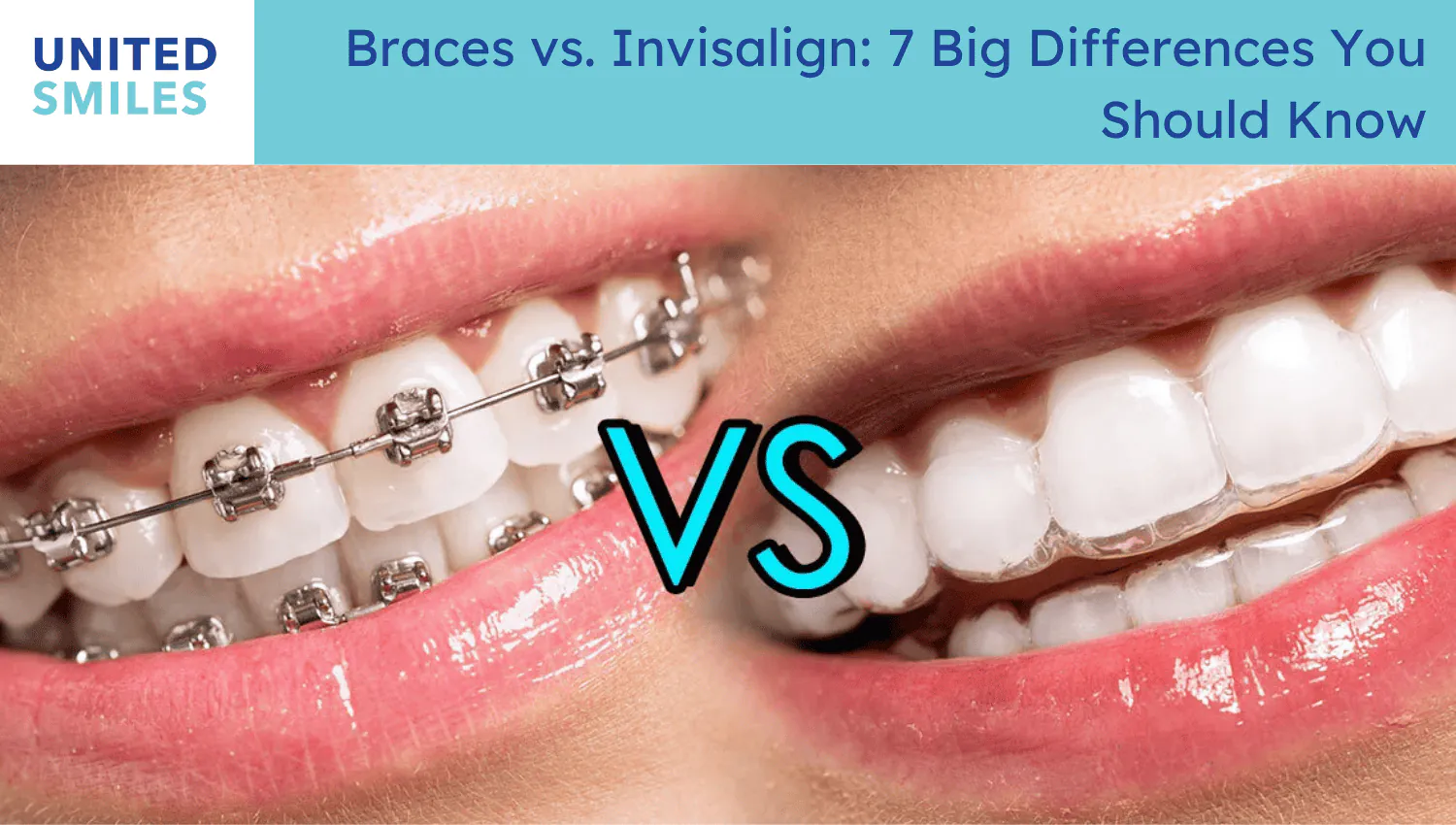
Here is the difference between braces and Invisalign appearance:
Invisalign is considered more comfortable compared to traditional braces. Both causes soreness at the start of treatment, yet the clear and smooth plastic of Invisalign does not result in extreme irritation to the soft tissues of the mouth. Brackets and wires of the braces cause irritation and soreness to cheeks and lips for a longer time. Aligner edges also feel sharp in some cases; your expert dentist fixes it on demand. The wires of the braces are tightened on frequent appointments, which creates temporary pain. Switching trays of the Invisalign for gentle pressure also causes such pain, yet it is less painful than the braces.
The overall duration of the treatment depends on the severity of the dental issue and the compliance of the patient. Traditional braces remain fixed to the teeth and are good for complex issues. Severe bite issues, a large gap between teeth, and complex bite issues are solved easily using these braces. The average timeline for the braces is 18-24 months, which can be increased or decreased depending on the case complexity. Invisalign is best for mild-moderate issues. It requires 12-18 months on average to align the teeth. The duration of the treatment depends on the compliance of the patient. It needs to be worn for 22 to 24 hours per day for better and quicker results. The whole treatment is planned digitally at the start, which makes it predictable and suitable for less complex cases.
The maintenance of braces is more difficult than that of Invisalign. Braces remain fixed with teeth during the treatment duration, which results in oral hygiene issues. It needs water flossers, threaders, or special brushes to clean the areas near the brackets. Dentists advise brushing teeth after a meal to maintain the cleanliness of braces, which becomes a difficult task. Invisalign can be taken out, making it simpler to maintain good oral hygiene. There is no risk of plaque formation or teeth staining at the end of treatment. The aligners are cleaned separately with the use of lukewarm water, a brush, and an antibacterial soap or the recommended brand crystals of Invalign.
Braces require proper care to prevent damage to brackets and wires. A sticky, crunchy, or hard food can turn or twist the wire, resulting in decreased pressure on the teeth. Apples and nuts need to be sliced into smaller pieces or chunks to maintain the structure of the braces. Invisalign doesn’t restrict the patient's favorite foods. The sticky, hard, or crunchy food is allowed to be eaten after removing the aligners. They need to brush their teeth before putting the aligners back into their mouth to prevent any food from being trapped in the teeth and then in the aligners.
Comparing the cost of both treatments is difficult due to the diverse costs depending on different factors. It varies with the duration, complexity of the case, expertise of the orthodontist, and the area of the treatment. The average prices of the braces are $3,000–$7,000, which depends on the type and length. Traditional braces are a little cheaper than the ceramic and lingual braces. Invisalign ranges from $3,000–$8,000, which depends on the provider and the type of aligners. Invisalign costs less for correcting minor dental issues compared to traditional braces.
Braces are recommended for complex issues due to their consistent pressure insertion on teeth. It solves severe misalignment, complex bite issues, overcrowding, gaps between the teeth, and complex jaw alignment issues. The consistent pressure ensures more powerful and predictable results than those of Invisalign. Invisalign is used for mild-moderate issues as it speeds up the process and is less noticeable. Although Invisalign is upgraded with the use of SmartForce attachment, it is still not as effective as braces.
The choice depends on the lifestyle, comfort, aesthetic preferences, and severity of the case. Both treatments are good for dealing with tooth alignment issues. Invisalign is better for flexibility, comfort, and appearance. They are more friendly with oral hygiene than the braces. While braces are more reliable for solving complex corrections. Choose the right braces on the advice of the orthodontist, as they know the condition of the case well.


I had a great experience at Dr. Hetal Shah’s office! The staff was friendly and welcoming from the moment I arrived. The practice is very clean and hygienic. Dr. Shah was thorough and explained everything clearly during my check-up. The cleaning was gentle yet effective, and I appreciated the helpful tips she gave me for maintaining my oral health at home.

I found United Smiles on Yelp. They had good reviews, took my insurance, and were open on Saturdays, so I gave them a try. I was pleasantly surprised by the clean office and friendly staff. Dr. Shah was great! She was very friendly and gentle but thorough with my teeth cleaning. I look forward to future treatment with Dr. Shah & her staff.

I just finished my Invisalign treatment with Dr. Shah, and I’m so happy with the results! From the first consultation to getting my retainer, Dr. Shah and the team were super friendly and made sure I was comfortable throughout the whole process. They were always ready to answer my questions, and everything went smoothly and quickly. My smile looks great now, and I definitely recommend Dr. Shah to anyone thinking about Invisalign she is awesome at what she does!

I had a great experience during my first dental visit at United Smiles Dental Studio. Dr. Shah’s team make you feel welcomed from the moment you walk in! I recommend Dr. Shah if you’re looking for an honest, professional and caring dentist, she’s the best dentist we’ve met. She listens to your questions and concerns and explains everything during the exam. Thanks Dr. Shah and Team!

Our whole family visits United Smiles. We are very happy with their services. The staff is very friendly and welcoming. Dr Shah is amazing! She has remedy and good suggestions for all of our dental problems. Thank you Dr Shah and team for everything!!

I had really nice experience, It was my first time I visited there & Doctor Hetal was Awesome & all staff was really good.

Dr. Hetal is very nice and gentle with kids. I highly recommend her. She is knowledgeable and listens to all the concerns really well. My kids like her a lot!

I had a great experience with Dr. Shah to replace a broken filling. She was fast and meticulous at the same time, couldn’t have asked for a more pleasant experience. The young man assisting Dr. Shah was very helpful too. Thank you so much, Dr. Shah!

Dr. Shah is extremely thorough in my examination and cleaning my teeth today. Dr. Shah is very warm and friendly. I recommend her to everyone.


Are you ready to transform your smile with Invisalign? Contact us now or request your first appointment to start your journey toward a healthier, more confident smile!
Schedule TodayJoin our monthly newsletter to receive expert dental advice, seasonal promotions, and the latest news from United Smiles Dentistry.


HOURSMonday | 9 AM–5 PM
Tuesday | 9 AM–5 PM
Wednesday | 9 AM–5 PM
Friday | 9 AM–5 PM
Saturday | 9 AM–3 PM
Thursday | Closed
Sunday | Closed
Contact Us
United Smiles Dentistry
1523 N Vasco Rd,
Livermore, CA 94551
(925) 373-4855
.png)
.png)

Subscribe Newsletters


