
October 16, 2025
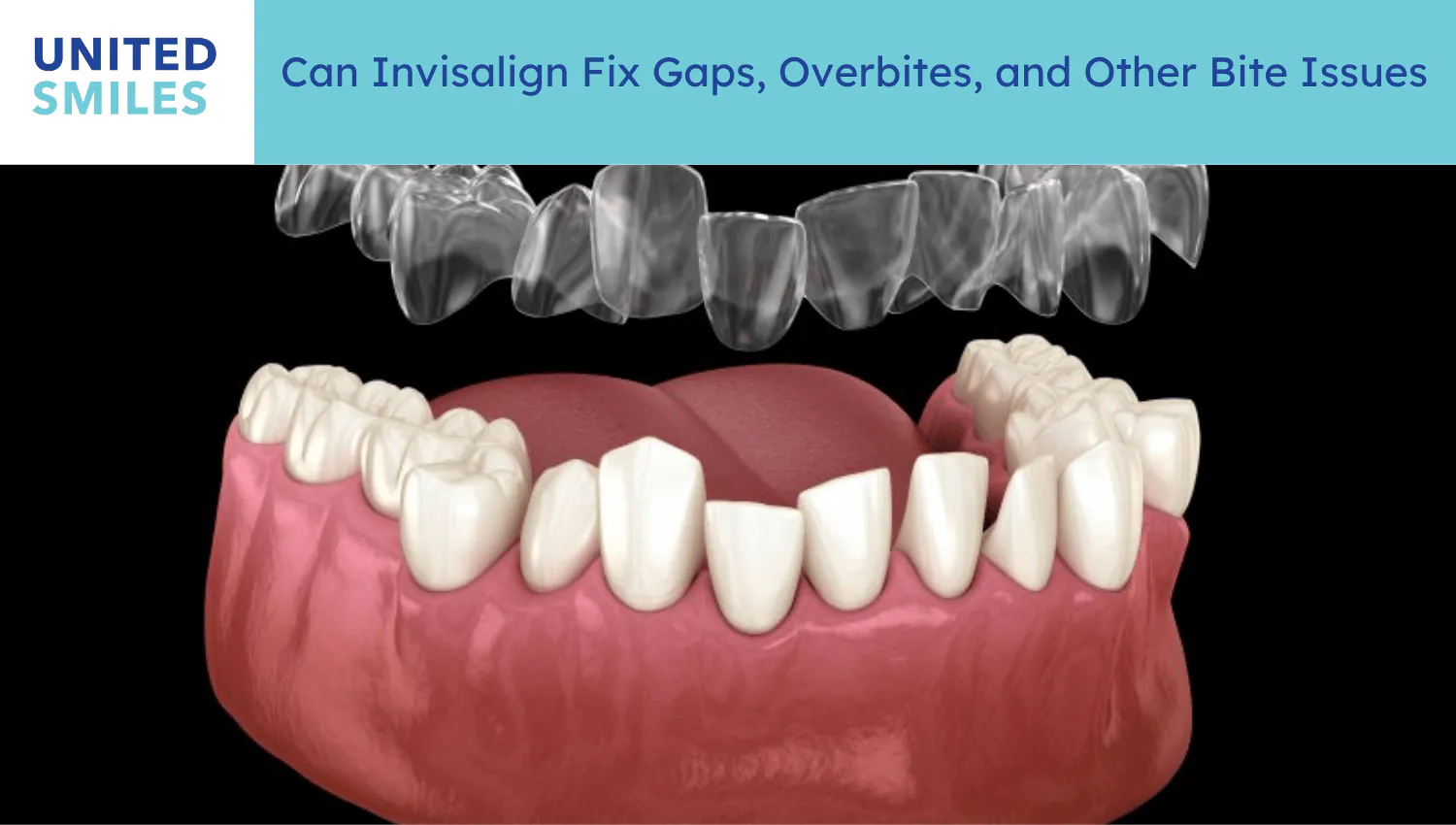
Yes, Invisalign treatment can fix the gaps, overbites, and other alignment or bite-related issues. It is composed of transparent, medical-grade plastic, which puts consistent pressure on the teeth and gradually moves them to their intended position. In case of more severe issues, the orthodontist uses attachments or other tools to align them. The results of the treatment depend on the patient's age, compliance, expertise of the orthodontist, and the severity of the case.
Yes, Invisalign treatment can fix the gaps between teeth, also known as diastema. It’s an effective way to correct mild to moderate gaps between teeth. The success of the treatment mainly relies on how well the patient follows the guidelines and the complexity of the case.
A large gap or a severe issue needs attachments or an elastic band to enhance the effectiveness of treatment. The orthodontist also recommended combining the Invisalign treatment with veneers or dental bonding.
Yes, Invisalign treatment can correct mild-moderate bite-related issues like overbite. IN overbite issues, the upper teeth overlap with the lower teeth. Invisalign treatment uses custom-made aligners to gradually shift the affected teeth to their normal position. In teenage patients, this treatment is lightly modified due to their developing jawbones. Precision wings are used to direct their lower jawbone forward when the patient bites down. Rubber or elastic bands are used in addition to aligners for adults to apply extra force on their jawbones. Complex skeletal overbites require traditional races treatment or surgery.
Yes, Invisalign treatment can solve the underbite issues. Aligners put pressure to reposition the lower teeth backward and the front teeth forward. Invisalign treatment is most commonly used for dental (tooth-related) underbites instead of skeletal-related issues. Skeletal problems are corrected through a combination of orthodontic treatment and surgical procedures. Severe cases of teeth are also solved with braces or surgery.
Yes, the crossbite issue is solved using Invisalign treatment. A constant pressure is applied to shift the target teeth inwards or outwards to correct the bite issue. Uneven teeth put unnecessary pressure on other teeth, resulting in wear. Invisalign treatment prevents this uneven wear and gum disease. In skeletal-related issues, a palatal expander expands the jaw and makes room to widen the affected jaw. Complex cases are also treated using braces or other combinations.
Yes, Invisalign can solve the open bite issues to close the bite. This treatment is most effective for open bites caused by habits like thumb sucking or tongue protrusion. Attachments or elastic bands are attached to the target teeth to apply additional pressure and streamline the process. This treatment does not address the underlying jawbone growth issues. An orthodontist recommends braces or surgery for severe issues.
Yes, Invisalign treatment is one of the most effective dental treatments for crowding issues. A dental arch is commonly used in the lower jaw or for both the upper and lower jaw to create extra space between teeth. It allows them to align properly. The interproximal reduction method is used to create space for tooth movement with enamel reshaping(normally 0.2-0.5mm). Complex cases require expanders or extraction before the Invisalign treatment.
Invisalign can solve the mild-moderate bite-related issues effectively. It has limited functionality to solve the skeletal problems. In case of underbite or overbite issues, the jaw misalignment needs braces, surgery, or attachments in severe cases. Vertical movements or tooth rotation are also difficult to treat just with Invisalign aligners. Lowering or raising the position of a tooth is challenging for aligners. The patients who don’t wear an aligner for 20-22 hours each day also fail to complete this treatment.
The duration of treatment varies with the expertise of the orthodontist, the patient's compliance, and the severity of the issues. Typically, the duration for mild cases(small gaps, slight crowding, and mild overbites) is 6-12 months. Moderate-complex cases(larger gaps, noticeable crowding, and specific underbite or overbite) need 12-24 months, which can be increased depending on the age and compliance of the patient. The patient is required to wear the aligners for 20-22 hours a day. It is measured with the use of blue indicators on the aligners that fade off with the passage of time, which reveals the patient's compliance.
A general dentist just checks the issue and starts the Invisalign treatment. An orthodontist does a complete in-depth search with X-rays and scans to find out the exact issues. Then, the orthodontist recommended the treatment that is suitable according to the severity and the kind of issues. Complex cases often need a combination of treatments like braces and surgery, aligners and attachments, or other treatments. Professional consultation costs more one time, but it is a safer and easier method to treat dental issues effectively.


I had a great experience at Dr. Hetal Shah’s office! The staff was friendly and welcoming from the moment I arrived. The practice is very clean and hygienic. Dr. Shah was thorough and explained everything clearly during my check-up. The cleaning was gentle yet effective, and I appreciated the helpful tips she gave me for maintaining my oral health at home.

I found United Smiles on Yelp. They had good reviews, took my insurance, and were open on Saturdays, so I gave them a try. I was pleasantly surprised by the clean office and friendly staff. Dr. Shah was great! She was very friendly and gentle but thorough with my teeth cleaning. I look forward to future treatment with Dr. Shah & her staff.

I just finished my Invisalign treatment with Dr. Shah, and I’m so happy with the results! From the first consultation to getting my retainer, Dr. Shah and the team were super friendly and made sure I was comfortable throughout the whole process. They were always ready to answer my questions, and everything went smoothly and quickly. My smile looks great now, and I definitely recommend Dr. Shah to anyone thinking about Invisalign she is awesome at what she does!

I had a great experience during my first dental visit at United Smiles Dental Studio. Dr. Shah’s team make you feel welcomed from the moment you walk in! I recommend Dr. Shah if you’re looking for an honest, professional and caring dentist, she’s the best dentist we’ve met. She listens to your questions and concerns and explains everything during the exam. Thanks Dr. Shah and Team!

Our whole family visits United Smiles. We are very happy with their services. The staff is very friendly and welcoming. Dr Shah is amazing! She has remedy and good suggestions for all of our dental problems. Thank you Dr Shah and team for everything!!

I had really nice experience, It was my first time I visited there & Doctor Hetal was Awesome & all staff was really good.

Dr. Hetal is very nice and gentle with kids. I highly recommend her. She is knowledgeable and listens to all the concerns really well. My kids like her a lot!

I had a great experience with Dr. Shah to replace a broken filling. She was fast and meticulous at the same time, couldn’t have asked for a more pleasant experience. The young man assisting Dr. Shah was very helpful too. Thank you so much, Dr. Shah!

Dr. Shah is extremely thorough in my examination and cleaning my teeth today. Dr. Shah is very warm and friendly. I recommend her to everyone.


Are you ready to transform your smile with Invisalign? Contact us now or request your first appointment to start your journey toward a healthier, more confident smile!
Schedule TodayJoin our monthly newsletter to receive expert dental advice, seasonal promotions, and the latest news from United Smiles Dentistry.


HOURSMonday | 9 AM–5 PM
Tuesday | 9 AM–5 PM
Wednesday | 9 AM–5 PM
Friday | 9 AM–5 PM
Saturday | 9 AM–3 PM
Thursday | Closed
Sunday | Closed
Contact Us
United Smiles Dentistry
1523 N Vasco Rd,
Livermore, CA 94551
(925) 373-4855
.png)
.png)

Subscribe Newsletters


